Sewing in Progress Quote SVG: Crafts & Graphics Asset Review
First Impression: Warm, Handmade, and Intentionally Imperfect
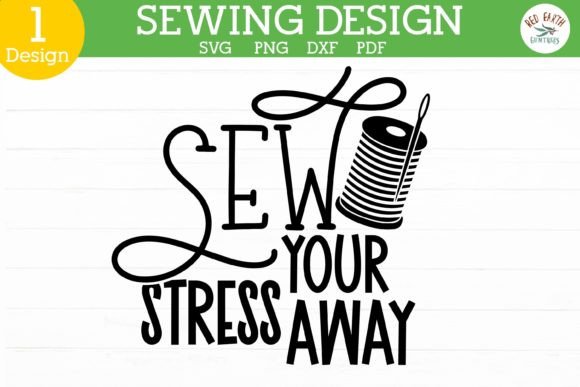
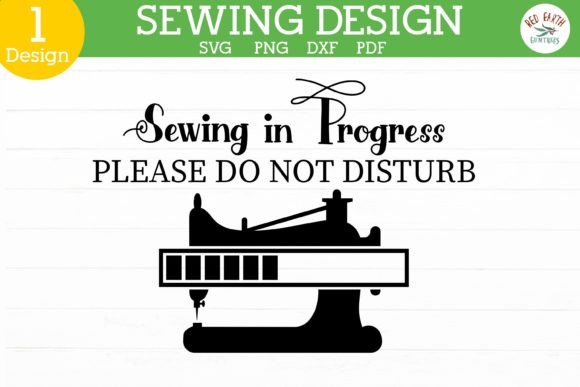
Opening the Sewing in Progress Quote SVG,sewing Svg feels like unrolling a well-loved fabric swatch—soft edges, gentle curves, and a quiet confidence in its craft. It’s not sleek or minimalist; it’s a graphic design asset built for emotional resonance. The quote “Sewing in Progress” appears in a relaxed, slightly uneven script—evoking hand-stitched lettering rather than digital precision. There’s subtle stitching detail woven into the baseline, and faint thread loops frame the phrase like delicate embroidery. This isn’t just clipart—it’s an illustration with narrative weight. For a client project centered on a handmade business—say, a seasonal Etsy launch for artisanal quilting kits or a local fiber arts festival—it immediately sets a tone of authenticity, patience, and tactile joy.
Where It Shines: Real-World Design Applications
In packaging design, this SVG anchors beautifully on cotton muslin gift tags, kraft paper labels, and reusable tote bag mockups. Its organic rhythm supports—not competes with—natural textures. As part of a brand identity system, it works powerfully as a supporting element: think corner accents on product brochures, watermark-style overlays on Instagram posts, or decorative dividers in Canva templates for sewing workshops. For Cricut projects, the vector scalability means crisp cuts on iron-on vinyl for aprons or tea towels. In printable design contexts—like downloadable sewing journals or printable wall art—it holds warmth without sacrificing clarity at 8×10”. As a sublimation design, it transfers cleanly onto mugs and pillows, where its soft contrast reads as intentional, not muddy.
It excels in large layout areas: hero graphics for landing pages, full-bleed social media banners, or background elements in editorial design for craft magazines. On product mockups—especially for fabric bundles, needle kits, or vintage-inspired notions—it adds instant thematic cohesion. And because it’s delivered in SVG, PNG, DXF, PDF, and EPS formats (zipped for easy download), it integrates smoothly across platforms: Illustrator for logo refinement, Silhouette Studio for cutting, Canva for quick social media graphics, and even web design via inline SVG for lightweight, responsive use.
Where to Use It Thoughtfully
This is not a universal utility asset. At small sizes—under 1.5 inches wide—the stitching details blur, and the script becomes hard to read. Avoid placing it in crowded layouts where competing icons or dense text undermine its gentle presence. On low-contrast backgrounds (e.g., light gray over off-white), the subtle thread lines vanish. It also doesn’t serve minimalist branding well: if your client’s visual language relies on strict grids, monoline sans serifs, or high-gloss photography, this SVG may feel tonally dissonant. Likewise, it’s unsuited for corporate marketing visuals, legal documentation, or B2B tech branding—contexts demanding neutrality and immediate legibility over charm.
Impact on Core Design Principles
Readability is contextual: excellent at medium-to-large scale, but compromised when scaled down or overlaid on busy patterns. Visual hierarchy benefits when used as a secondary focal point—not the headline, but the thoughtful pause beneath it. Brand consistency strengthens when paired intentionally: imagine it beside a clean serif font for body copy, or offset by bold sans-serif headers in a blog post about slow fashion. Emotional appeal is its strongest suit—it signals care, process, and human-made value, which builds visual trust with audiences seeking authenticity. For small business branding, that resonance translates directly to audience engagement and perceived professionalism—not through polish alone, but through intentionality.
Practical Designer Notes Before Client Use
- Test in black and white: Confirm the script remains legible without color cues—critical for embroidery or single-color print runs.
- Check contrast: Preview on both light and dark backgrounds; the included PNG should have clean transparency, but verify alpha channels before importing into web or packaging files.
- Scale rigorously: View at 25%, 100%, and 300% in Illustrator or Figma—look for unintended stroke breaks or pixelation in raster versions.
- Mock it up: Drop it onto real product mockups (tote bags, fabric rolls, journal covers) to assess proportion and mood alignment.
- Print test: Run a physical proof on uncoated paper and cotton tag stock—vector files hold, but ink absorption can mute fine thread lines.
- Inspect editability: Open the SVG in a vector editor—confirm anchor points are clean and text is outlined (or editable, if needed for client customization).
- Font pairing check: Try it beside serif (e.g., Playfair Display), sans serif (e.g., Inter), script (e.g., Pacifico), and display fonts (e.g., Bree Serif)—it harmonizes best with warm, grounded typefaces.
- Licensing verification: Ensure the commercial license permits use in client deliverables—including print-on-demand, digital products, and Etsy listings—before finalizing scope.
Final Verdict: A Purpose-Built Creative Asset
The Sewing in Progress Quote SVG,sewing Svg isn’t filler—it’s a deliberate creative design choice. For designers building visual systems around handmade business, seasonal campaigns, or tactile storytelling, it delivers emotional precision. It supports marketing visuals without shouting, enhances packaging design without cluttering, and elevates social media graphics with quiet authenticity. As a digital product, its multi-format delivery makes it production-ready. As a graphic design asset, it earns its place not through versatility, but through voice: warm, unhurried, and unmistakably human. When your client’s story is about process—not just product—this SVG doesn’t illustrate it. It embodies it.